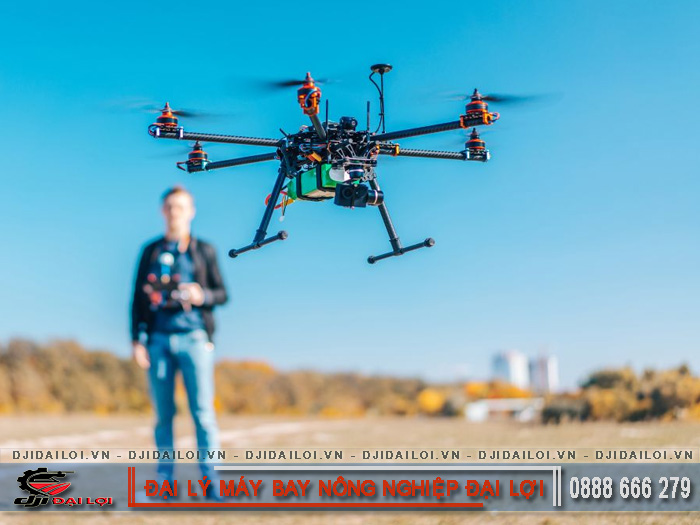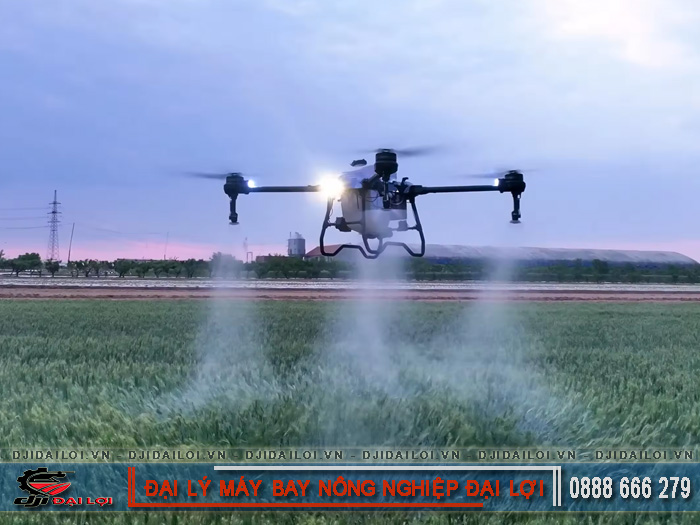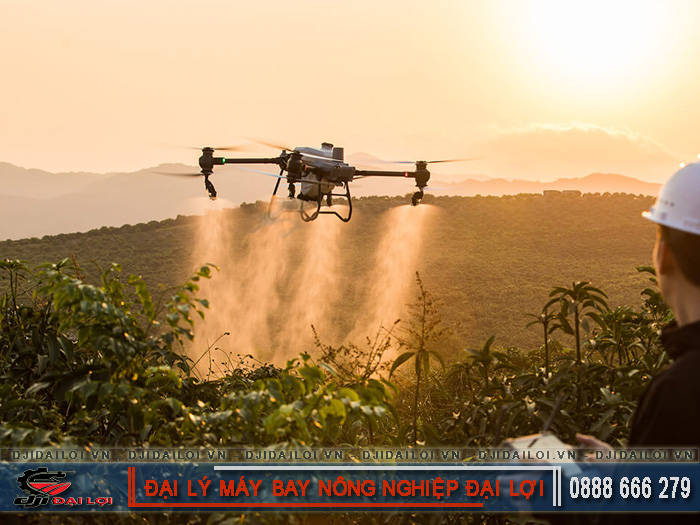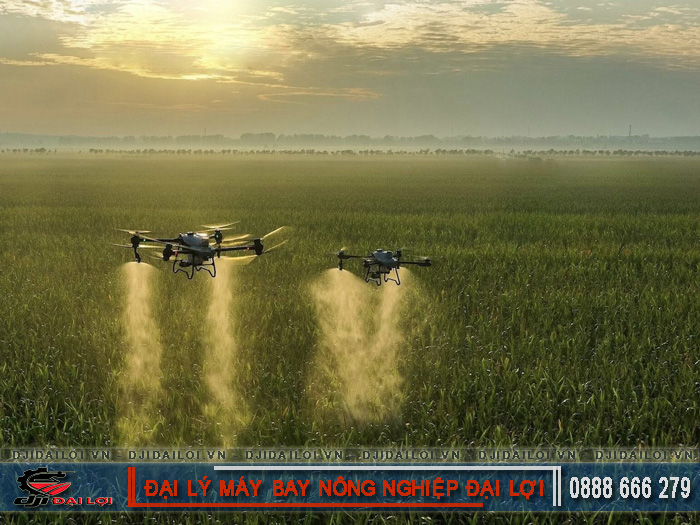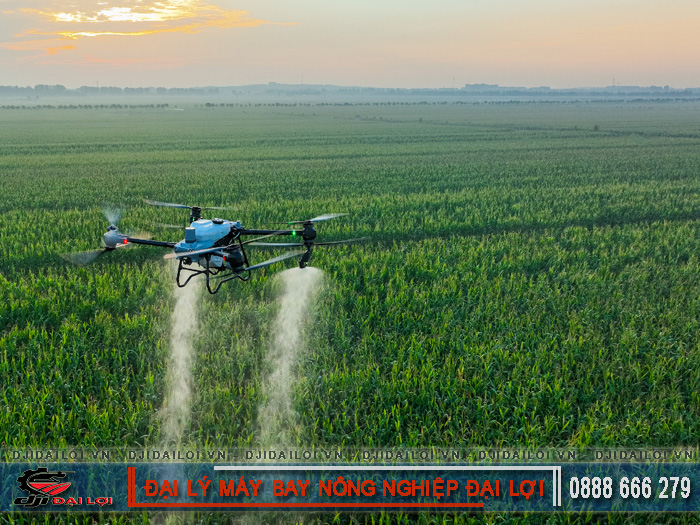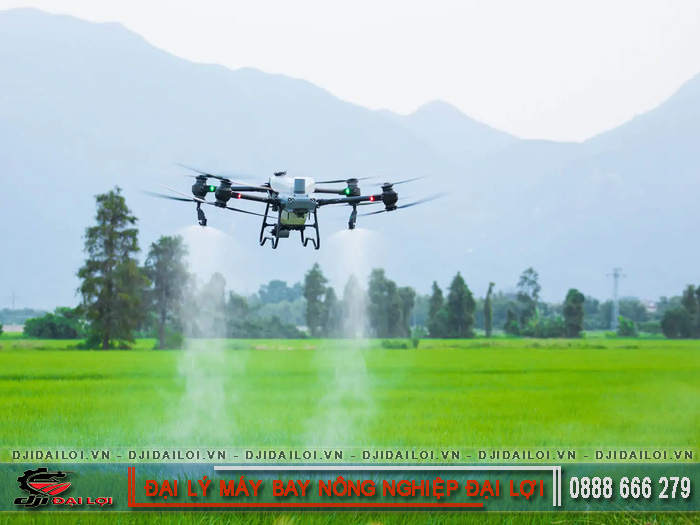
An RTK spraying drone is an unmanned aerial vehicle equipped with a Real-Time Kinematic (RTK) positioning system that determines location with centimeter-level accuracy. The technology uses real-time correction data exchanged between the drone and an RTK base station to ensure precise flight paths and spraying zones, minimizing coordinate deviation during operation.
Compared with conventional spraying drone, an RTK spraying drone works by combining GNSS signal transmission with differential correction, maintaining stability throughout spraying-especially on uneven fields or in areas with weak signal coverage.
A GPS spraying drone relies on the Global Positioning System to determine its position and navigate. It receives signals from multiple satellites simultaneously and calculates its current coordinates to maintain its route. However, a GPS drone usually achieves an accuracy of ±50–100 cm, depending on weather, obstacles, and signal strength.
In practice, GPS performs well for small farms where pinpoint accuracy is not critical. Yet when synchronized mapping or complex topographic spraying is required, the RTK spraying drone clearly shows superior performance.
In smart farming, precise positioning directly affects spraying efficiency. Even a few centimeters of deviation can cause uneven pesticide distribution, leading to waste and reduced yields.
Thanks to real-time correction, RTK spraying drone ensure each crop row receives the exact dosage required, reducing 20–30% of pesticide use compared to traditional methods. This technology helps farmers save costs while protecting the environment and operator health.
|
Criteria |
RTK Spraying Drone |
GPS Spraying Drone |
|---|---|---|
|
Accuracy |
Error < 3 cm |
Error 50–100 cm |
|
Flight stability |
High, precise coordinate tracking |
Affected by wind or signal interference |
|
Autonomous flight path |
Fully accurate per RTK map |
May deviate 1–2 m in field |
|
Best use case |
Large fields, complex terrain |
Small farms, flat areas |
This performance gap makes the RTK spraying drone the preferred option for precision farms or high-tech cooperatives.
When flying in areas with dense canopy, hilly terrain, or weak satellite signals, a GPS spraying drone can lose positioning or drift off course. In contrast, an RTK drone maintains precise coordinates through the data link between its RTK base station and rover unit.
This advantage is crucial during rainy seasons or nighttime spraying, where visibility is limited. In fact, models like DJI T40 RTK or T50 RTK perform stably in signal-interference environments, minimizing collision and flight-path errors.
RTK systems provide correction within less than one second, allowing the drone to instantly adjust altitude or direction when deviation occurs. GPS, on the other hand, takes 3–5 seconds to update coordinates, making flight adjustments less precise.
Thanks to this fast correction, RTK spraying drone deliver smoother and more stable flight paths, optimizing pesticide coverage and reducing operation time by 10–15% per hectare compared with GPS.
An RTK spraying drone offers centimeter-level positioning accuracy, enabling even spraying across the entire field. This feature is particularly valuable on sloped terrain, terraces, or mixed crops.
By controlling the spray zone precisely, RTK prevents flight path overlap, a common issue with GPS drones that can cause over-application at boundary points.
By integrating 3D terrain maps and RTK base data, an RTK spraying drone can automatically adjust altitude, speed, and spray angle based on ground slope.
This capability is especially beneficial for paddy fields, industrial crops, and low-lying lands where terrain varies. As a result, coverage remains consistent without missed or duplicated zones.
Field tests show farms using RTK drones reduce pesticide consumption by 20–30% and labor costs by over 40% compared to manual spraying.
An RTK spraying drone can treat one hectare in just a few minutes, minimizing chemical drift outside target zones. This long-term investment is highly effective for operations covering over 10 hectares per day.
An RTK spraying drone such as the DJI T40 or T50 costs around USD 8,000–12,000, significantly higher than standard GPS drones. In addition, operators must be trained to handle base calibration, mapping, and signal correction.
This can be a barrier for smallholders with limited capital or little experience using advanced agricultural equipment.
RTK systems only perform optimally when the connection between the base station and drone remains uninterrupted. In mountainous regions or areas with weak networks, RTK drones may experience temporary signal loss or coordinate drift.
Using a mobile RTK or Virtual Reference Station (VRS) can mitigate this issue, but it raises initial setup costs.
Due to multiple sensors and high-end modules, maintaining an RTK spraying drone is more complex than a GPS model. Operators must know how to update firmware, calibrate RTK modules, and inspect systems regularly.
Improper maintenance can cause synchronization loss, affecting accuracy. Thus, partnering with authorized DJI service centers ensures performance longevity and precise operation.
Why do many small farms choose GPS spraying drone? → Because they are more budget-friendly and require far lower upfront investment than RTK spraying drone. Popular models like DJI T20P or T25P cost about USD 5,000–7,000-ideal for family farms or cooperatives.
Additionally, maintenance costs are low and no RTK base station or stable network is needed, allowing easy operation.
A major advantage of GPS spraying drone is ease of use. Farmers can set boundaries and spray routes via mobile apps without RTK calibration or complex positioning setup.
This makes GPS drones perfect for rural areas lacking stable internet, where deploying RTK spraying drone can be challenging.
GPS spraying drone perform well on rice, corn, sugarcane, coffee, rubber, and fruit trees, handling both flat and gently sloped fields.
When paired with auto-mapping, GPS drones still ensure efficient spraying for farms under 10 hectares, making them a practical and popular choice for smallholders.
|
Criteria |
RTK Spraying Drone |
GPS Spraying Drone |
|---|---|---|
|
Spray zone accuracy |
±3 cm |
±50–100 cm |
|
Path overlap rate |
<3% |
8–12% |
|
Spray uniformity |
High and stable |
Inconsistent near field edges |
|
Performance on large fields |
Even coverage |
Minor deviations at boundaries |
With its superior precision, the RTK spraying drone is ideal for high-tech farms demanding exact pesticide distribution.
Field trials in Đồng Tháp and Lâm Đồng show RTK spraying drone save 25–30% pesticide compared to GPS. The key advantage lies in its precise path control and reduced overlap-essential for farms larger than 20 hectares.
Meanwhile, GPS drones still achieve 10–15% savings versus manual spraying, making them efficient for smaller operations.
A DJI T50 RTK drone can spray 15–20 hectares/day, while GPS drones typically manage 10–12 hectares/day depending on conditions. RTK’s accurate navigation minimizes manual adjustments, shortening task duration.
For small farms, however, GPS remains efficient and cost-effective for limited-scale spraying.

|
Category |
RTK Spraying Drone |
GPS Spraying Drone |
|---|---|---|
|
Purchase cost |
200–300 million VND |
120–180 million VND |
|
Annual maintenance |
10–15 million VND |
5–8 million VND |
|
Average lifespan |
4–5 years |
3–4 years |
|
Replacement parts |
20–30% higher cost |
Cheaper, widely available |
Though more expensive upfront, RTK spraying drone deliver faster ROI when operated at scale due to superior efficiency and chemical savings.
For farms under 10 hectares, GPS is more economical-easy to maintain and operate. However, for farms over 20 hectares, RTK spraying drone drastically reduce labor and chemical costs, leading to sustainable profitability.
Large cooperatives report ROI within 1.5–2 years after adopting RTK systems.
An RTK spraying drone can save 15–20 million VND per hectare per season in chemicals and labor. With 2–3 uses annually, payback time averages 1–2 years, depending on workload.
This explains why modern farms are rapidly transitioning from GPS to RTK for better long-term efficiency.
Choose an RTK spraying drone when:
For farms under 10 hectares, GPS spraying drone are ideal. They’re cheaper, easier to maintain, and still cut spraying costs by 30–40% compared to manual methods.
GPS also performs reliably in areas lacking RTK or network signals, maintaining stable flight without a base station.
When purchasing, farmers should:
With the right choice, both RTK and GPS spraying drone help farmers boost productivity, save costs, and advance toward sustainable smart farming.
Not always. RTK spraying drone can operate with local base stations for correction, needing internet only for map updates and data synchronization.
Yes, temporarily. They use backup data for navigation, though accuracy drops. Once signals stabilize, the RTK system automatically re-calibrates.
Some high-end models support external RTK modules, but upgrades are costly. Buying a fully integrated RTK version ensures better compatibility and performance.
Not necessary. For areas under 10 hectares, GPS spraying drone work efficiently, saving costs and simplifying operation.
Typically 4–5 years, depending on use and maintenance. Proper care extends lifespan and maintains high-precision positioning.